Are Electronic Signatures Legally Binding?
Are electronic signatures legally binding? In most countries, yes — with conditions. In the United States, the ESIGN Act and UETA give electronic signatures the same legal effect as handwritten ones for most transactions. In the European Union, the eIDAS regulation states that a signature cannot be denied legal effect solely because it is electronic. The conditions that matter are intent to sign, consent to transact electronically, a reliable record of the signed document, and a document type that the law does not carve out (wills, for example, are excluded in many places).
That is the short answer. The longer answer is worth ten minutes of your time, because the difference between a signature that holds up and one that gets challenged usually comes down to details people skip: what the law actually requires, which documents are excluded, and what evidence you should keep.
This guide walks through the major frameworks, the EU signature tiers, the common exceptions, and the practical habits that make an e-signature defensible. One thing up front: this is general information, not legal advice — more on that at the end.
Are electronic signatures legally binding in the United States?
Two laws do the heavy lifting in the US. The federal Electronic Signatures in Global and National Commerce Act (ESIGN), passed in 2000, establishes that a signature, contract, or record may not be denied legal effect solely because it is in electronic form. It applies to transactions in interstate and foreign commerce — which, in practice, covers most business dealings.
At the state level, the Uniform Electronic Transactions Act (UETA), published in 1999, has been adopted by the vast majority of US states. It covers the same ground for intrastate transactions and adds useful definitions: an electronic signature is an electronic sound, symbol, or process attached to or logically associated with a record and executed with the intent to sign.
Notice how broad that definition is. A drawn squiggle, a typed name in a handwriting font, an uploaded image of your wet-ink signature — all qualify, provided the intent is there. US law is deliberately technology-neutral: it does not require any particular software, certificate, or vendor.
What US law actually requires
- Intent to sign. The signer meant the mark as a signature, not as a doodle or a draft annotation.
- Consent to do business electronically. Both parties agreed, expressly or through their conduct, to transact electronically. In business-to-business dealings, simply proceeding by email usually demonstrates this.
- Association with the record. The signature is attached to, or logically connected with, the document that was signed.
- Record retention. An accurate copy of the signed document is kept and can be reproduced for everyone entitled to it.
The EU picture: eIDAS and its three signature tiers
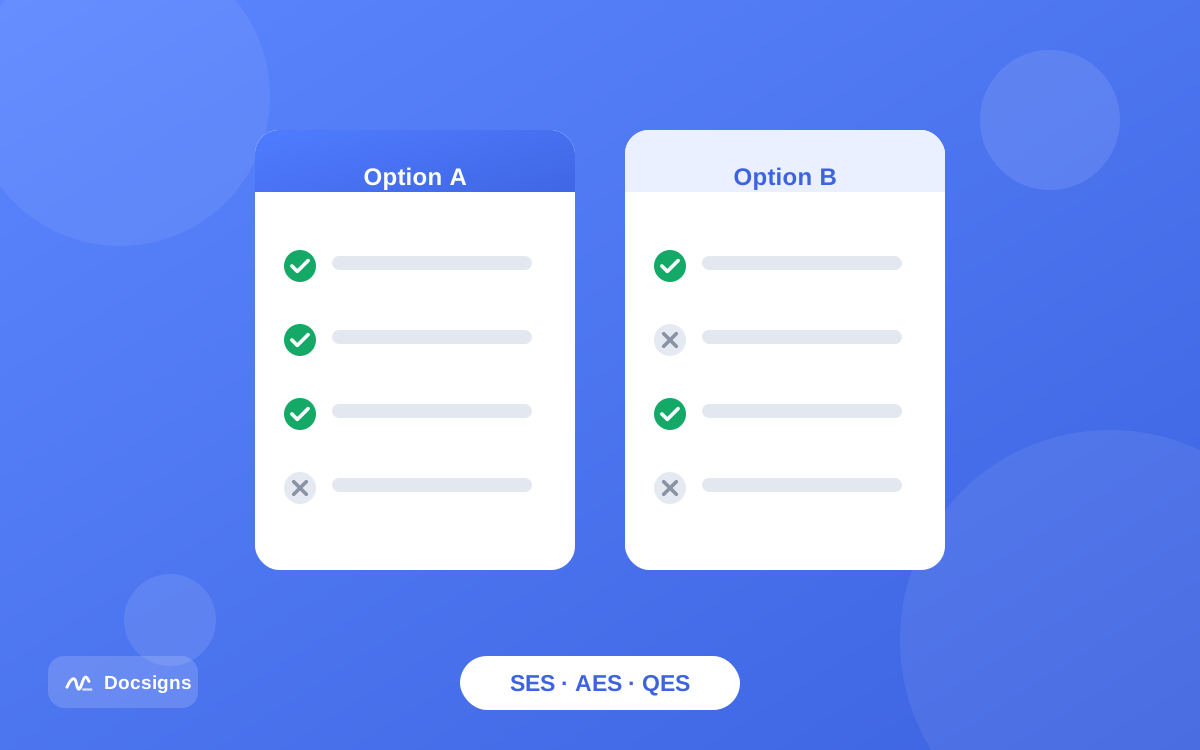
The EU regulates electronic signatures through eIDAS (Regulation 910/2014), which applies uniformly across all member states. Its foundational rule mirrors the US approach: an electronic signature shall not be denied legal effect or admissibility as evidence solely because it is in electronic form. But eIDAS goes further and defines three tiers:
Simple electronic signature (SES)
Any data in electronic form attached to other data and used by the signatory to sign. A drawn, typed, or uploaded signature — the kind you create in Docsigns — falls into this tier. SES is legally recognized and widely used for everyday commercial agreements, invoices, NDAs, and service contracts.
Advanced electronic signature (AES)
An AES must be uniquely linked to the signer, capable of identifying them, created using data under the signer's sole control, and linked to the document so that any later change is detectable. This typically involves certificate-based cryptography.
Qualified electronic signature (QES)
The highest tier: an AES created by a qualified signature creation device and backed by a qualified certificate from an audited trust service provider. A QES has the legal effect equivalent of a handwritten signature across the entire EU, and some regulated transactions specifically require it.
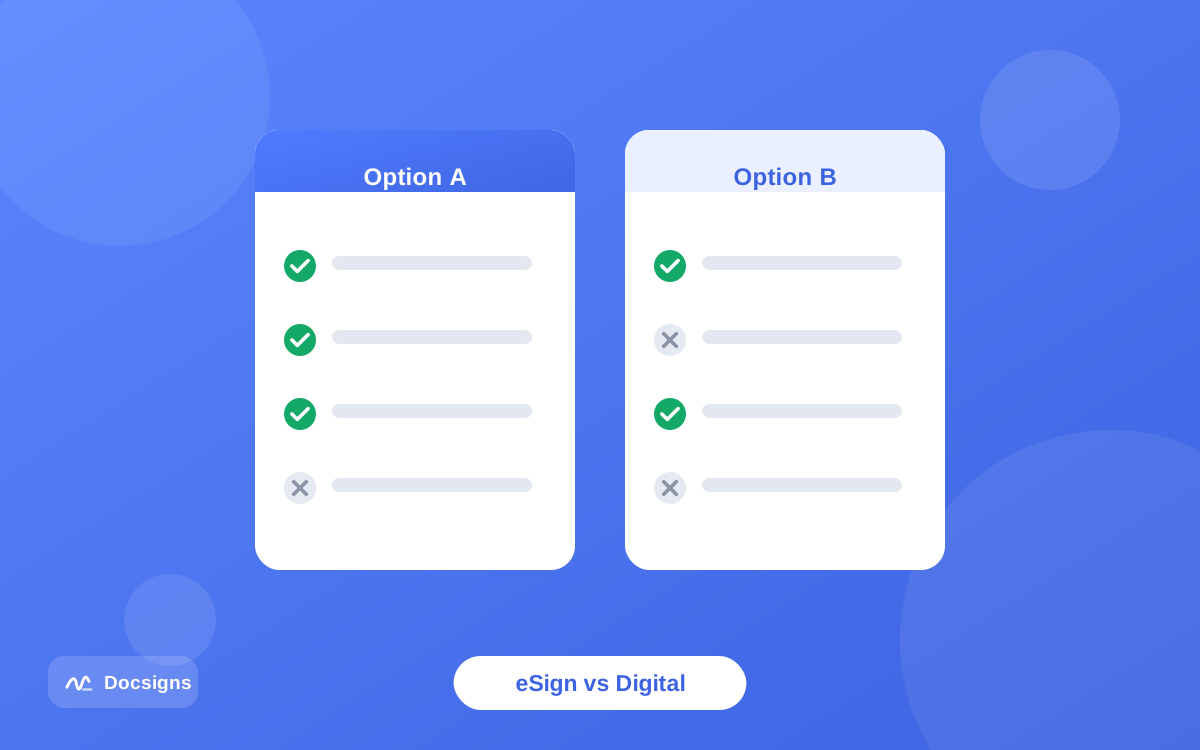
If the tiers sound like the electronic-versus-digital-signature distinction, that is exactly what they formalize — our guide on electronic signatures versus digital signatures unpacks the technology side.
Framework comparison at a glance
| Framework | Region | Core rule | Notable features |
|---|---|---|---|
| ESIGN Act (2000) | United States (federal) | E-signatures cannot be denied validity solely for being electronic | Technology-neutral; consumer-consent disclosure rules |
| UETA (1999) | United States (state level) | Same principle for intrastate transactions | Adopted by the vast majority of states; defines intent and attribution |
| eIDAS (2014) | European Union | Legal effect cannot be denied solely for electronic form | Three tiers (SES/AES/QES); QES equals handwritten across the EU |
| Similar laws | UK, Canada, Australia, India, and many others | Broad recognition with local variations | Categories and exceptions differ by country — check locally |
The pattern worldwide is consistent: electronic signatures are broadly recognized, the baseline tier covers most commercial paperwork, and higher-assurance tiers exist for regulated or high-stakes transactions.
When an electronic signature may NOT be enough
Every framework carves out document types where electronic signing is excluded or restricted. The carve-outs differ by jurisdiction, but the recurring ones are:
- Wills, codicils, and testamentary trusts — excluded under ESIGN and in many countries, though a few jurisdictions now allow electronic wills under specific rules.
- Family-law documents such as adoption and divorce papers in many places.
- Certain property transactions — deeds and some real-estate transfers may require wet ink, notarization, or registration formalities.
- Court documents and official notices — eviction, foreclosure, insurance cancellation, and utility shut-off notices have special rules under ESIGN.
- Documents requiring notarization or witnesses, unless the jurisdiction provides an electronic equivalent (remote online notarization exists in some US states).
If your document sits anywhere near these categories, do not guess. Ask a lawyer or the receiving institution what form of signature they require before you sign.
What makes an electronic signature defensible
Legality and defensibility are different questions. A signature can be perfectly legal yet hard to defend if you kept no evidence around it. If a dispute arises, you want to be able to show:
- Intent — the signature was placed deliberately as an act of agreement. The surrounding communication ("Signed copy attached, looking forward to starting Monday") demonstrates this well.
- Consent — both parties chose to transact electronically. In B2B contexts, the email exchange itself usually shows it.
- Attribution — the signature can be connected to the person who made it. Sending the signed document from your known email address is everyday attribution.
- Record integrity — the document was not altered after signing, and both parties hold the same final version.
- Retention — you can produce an accurate copy years later.
Simple habits cover all five: keep the negotiation email thread, exchange the fully signed copy so both sides hold it, use consistent file names, and back the file up. Our guide on signing documents online securely covers the privacy side of the same workflow.
A quick self-test: are electronic signatures legally binding for your document?
Run through three questions. First, is the document an ordinary commercial agreement (services, NDA, invoice approval, lease of the everyday kind) rather than a will, family-law, or registered-property document? Second, are both parties willing to sign electronically? Third, will you keep the signed copy and the surrounding correspondence? If all three answers are yes, a standard electronic signature is very likely sufficient — and if any answer is no, get local legal advice first.
Where Docsigns fits — and honest limits
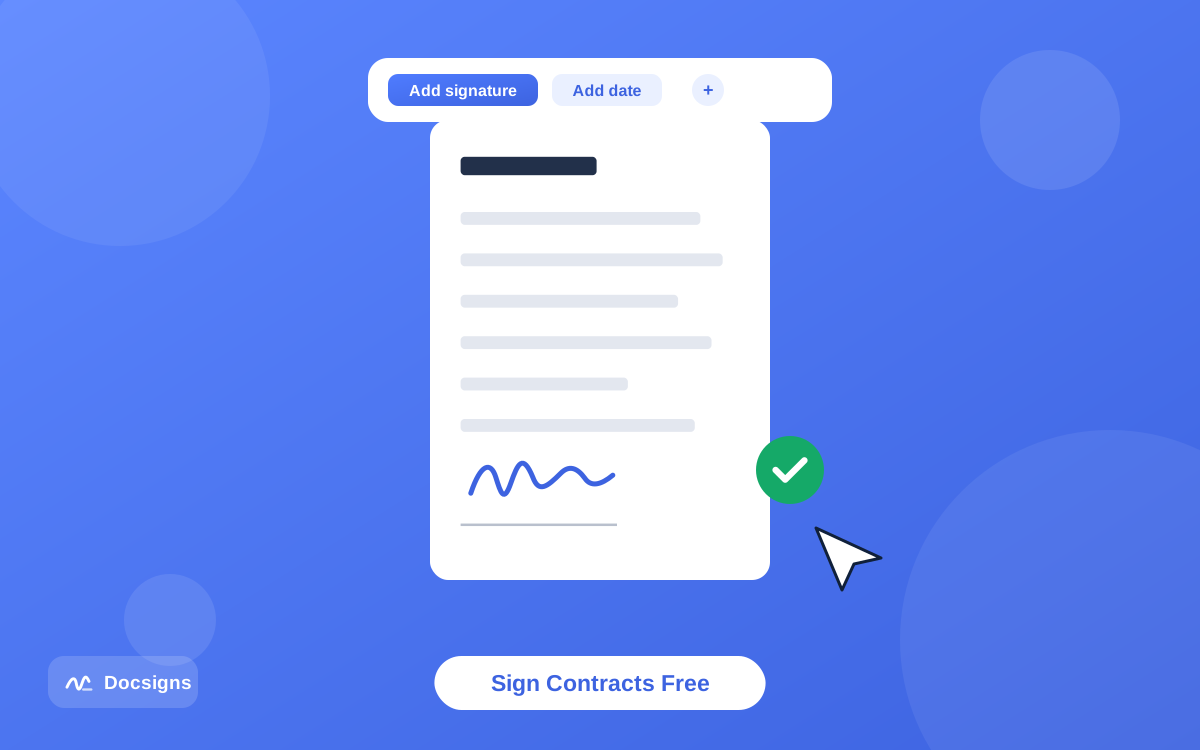
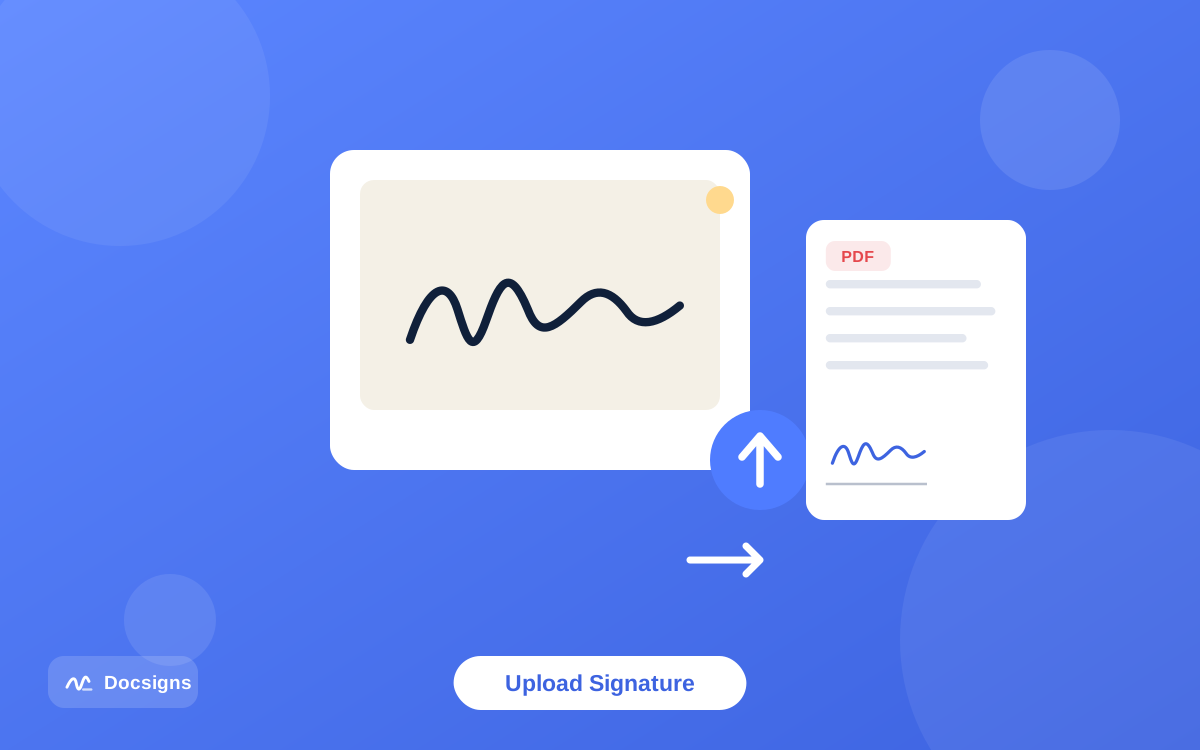
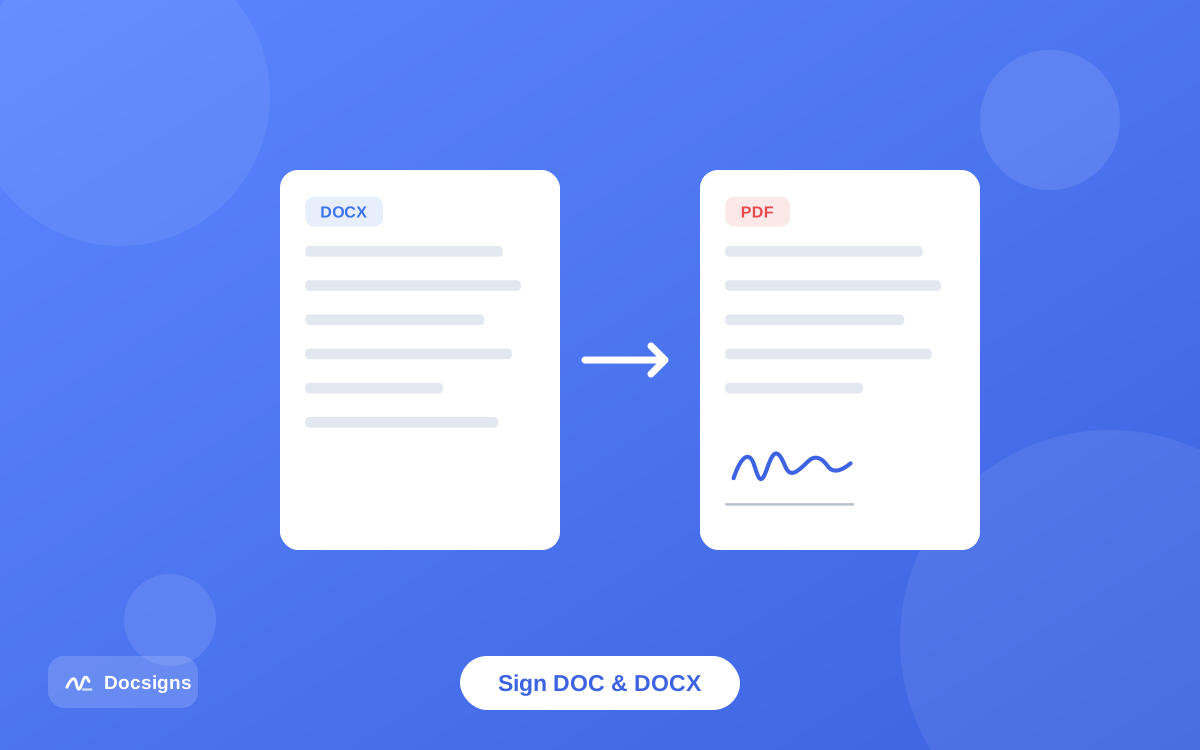
Docsigns creates simple electronic signatures: you draw, type, or upload your signature and place it on a PDF, DOC, or DOCX file, free and without signup. PDFs are rendered and signed entirely in your browser and never uploaded to a server, which is a genuine privacy advantage — no third party ever holds your unsigned contract. The signed download is a flattened PDF whose pages are images, making casual text-editing of the signed content impractical, and the file keeps its original name for a clean record.
Honest limits: Docsigns does not provide certificate-based digital signatures (AES/QES), audit trails, or multi-party signature workflows. If a transaction legally requires a qualified electronic signature or a cryptographic certificate, use a dedicated PKI-based tool for that document. For the everyday contracts that make up most of a freelancer's or small business's paperwork, a simple electronic signature — applied with intent and stored properly — is the appropriate tier, and the workflow in our guide on how to sign a contract electronically shows the full sign-and-return process.
Common myths, corrected
- "A typed name doesn't count." It can. US and EU law are technology-neutral; a typed name applied with intent to sign is a valid electronic signature for most documents.
- "Electronic signatures are less enforceable than ink." For covered transactions, the law says validity cannot be denied solely because the signature is electronic. Enforceability disputes almost always turn on contract terms or evidence, not the ink.
- "You need a paid platform for a signature to be legal." No law requires a specific vendor or price tag. Evidence habits matter more than software cost — a free signing tool plus good records beats an expensive platform plus sloppy records.
- "Scanned paper signatures are safer." A scanned signature pasted into a document is itself a simple electronic signature — it enjoys no special status over a drawn or typed one.
- "E-signatures work for every document." They do not. Wills, some family and property documents, and notarization-required paperwork are common exceptions.
A necessary disclaimer
This guide is general information, not legal advice. Electronic signature law varies by country, by US state, by document type, and by industry, and it changes over time. Nothing here creates a lawyer-client relationship, and you should not rely on it for a specific transaction. For high-value contracts, regulated industries, cross-border agreements, or anything touching the exception categories above, consult a qualified lawyer in the relevant jurisdiction before signing.
The bottom line on e-signature validity
So, are electronic signatures legally binding? For the overwhelming majority of everyday business documents in the US, EU, and most developed legal systems: yes — provided there is intent, consent, and a reliable record, and the document is not in an excluded category. The frameworks have been settled law for over two decades; courts uphold electronically signed agreements routinely.
The practical takeaway is to pair a legitimate signing method with good evidence habits: read before you sign, keep the thread, archive the fully signed copy. When you are ready, sign your document now with Docsigns — free, private, and in your browser — or learn the mechanics first in our guide on creating a digital signature for documents.
Frequently asked questions
Are electronic signatures legally binding in the US?
Yes, for most transactions. The federal ESIGN Act and state-level UETA provide that a signature or contract cannot be denied legal effect solely because it is electronic, as long as there is intent to sign, consent to transact electronically, and a retainable record. Exceptions include wills and certain family and property documents.
Are electronic signatures legally binding in the EU?
Yes. Under the eIDAS regulation, an electronic signature cannot be denied legal effect solely because it is electronic. eIDAS defines three tiers — simple, advanced, and qualified — and a qualified electronic signature (QES) has the same legal effect as a handwritten one across all member states.
Is a typed name a valid electronic signature?
Generally yes. E-signature laws are technology-neutral: any electronic symbol or process applied with the intent to sign qualifies. A name typed in a handwriting font, a drawn signature, or an uploaded signature image all meet the definition for most documents.
Which documents cannot be signed electronically?
Common exclusions are wills and testamentary documents, some family-law papers (adoption, divorce), certain property deeds, court documents, and notices like eviction or insurance cancellation. Exact exclusions vary by jurisdiction, so check locally for anything sensitive.
What makes an electronic signature hold up in a dispute?
Evidence of intent (deliberate signing), consent (both parties agreed to electronic dealings), attribution (the signature connects to the signer, e.g. sent from their known email), record integrity (an unaltered final copy), and retention (you can produce it later).
Is a free e-signature tool like Docsigns legally acceptable?
The law does not require any particular vendor or price. A signature created with a free tool and applied with intent is as recognized as one from a paid platform. Docsigns creates simple electronic signatures; transactions that legally require certificate-based qualified signatures need a dedicated PKI tool.
What is the difference between an electronic and a digital signature?
An electronic signature is any mark applied electronically with intent to sign. A digital signature is a cryptographic technique using certificates to verify identity and detect tampering — the technology behind the EU's AES and QES tiers. Most everyday contracts use simple electronic signatures.
Do electronic signatures expire?
A simple electronic signature on a contract does not expire; the agreement remains as valid as its terms provide. Certificate-based digital signatures rely on certificates that have validity periods, which is one operational difference between the two approaches.