How to Sign an NDA Online (Free, No Account Needed)
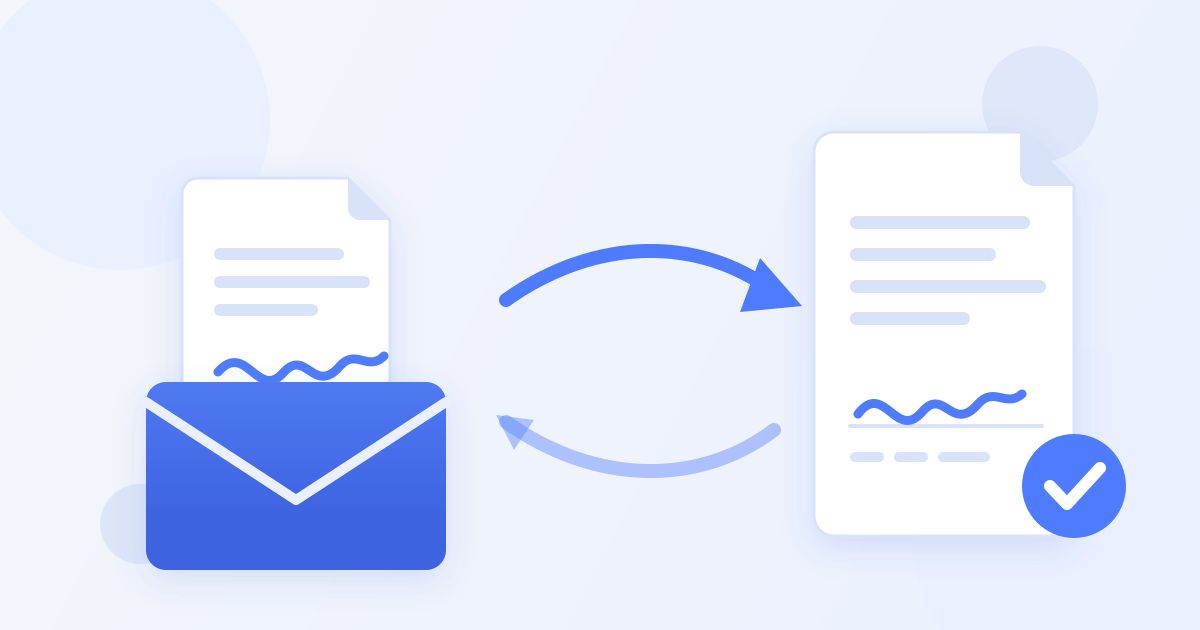
An NDA landed in your inbox and the other side is waiting. You do not need an account, a subscription or a printer: open the PDF in Docsigns, add your signature and the date, download the signed copy and email it back. The whole thing takes about two minutes, and there is no watermark on the file you send.
This guide covers the signing itself, the five clauses worth reading before you sign, how to handle an NDA that arrives as a Word file, and what to do with your copy afterwards. It is general information, not legal advice — if the agreement matters commercially, have a lawyer look at it.
Sign the NDA in four steps
- Open the signer and add the NDA. PDF, DOC and DOCX all work.
- Create your signature: draw it with a mouse, trackpad or finger, type your name in one of six cursive fonts, or upload a photo of a signature you already have on paper. Pick a pen colour if you want it to look distinct from the printed text.
- Drag the signature onto the signature line, resize it so it sits inside the space, and add the date next to it in whichever format the document uses.
- Download the signed PDF and reply to the sender with it attached.
Most NDAs need a signature in one place, sometimes with your printed name and title underneath. If the document has a block for each party, sign only yours — the other side signs theirs. The how it works page walks through the same three steps with screenshots if you would rather see it before you start.
What to read before you sign
An NDA is short by contract standards, so reading it properly costs you ten minutes. Five things decide whether it is a routine document or one to push back on.
| Clause | What to check |
|---|---|
| Definition of confidential information | Is it limited to what is actually shared for this project, or does it sweep in everything you learn about the company? |
| Direction | One-way (you receive secrets) or mutual (both sides do)? If you will also be sharing your own ideas, a one-way NDA protects only them. |
| Term | How long the duty lasts. Two to five years is common; indefinite obligations over ordinary business information are worth questioning. |
| Carve-outs | Standard NDAs exclude information that is already public, that you already knew, or that you must disclose by law. If those exclusions are missing, ask why. |
| Extra obligations | Watch for non-solicit, non-compete or IP-assignment language hiding in what was described as "just an NDA". |
That last row is the one that catches people out. An agreement titled "Mutual Non-Disclosure Agreement" can contain a clause saying you will not work with competitors for a year, or that anything you create during discussions belongs to them. Read to the end, including anything after the signature block.
If the NDA arrives as a Word file
Plenty of NDAs are sent as .doc or .docx because the sender edited them in Word. You can sign those here too — the file is converted to PDF first so a signature can be placed on the page, and the signed copy you download is a PDF.
It is worth being clear about what that means for privacy, because the two cases genuinely differ:
- A PDF is signed in your browser. The file is not uploaded anywhere; the signing happens on your own machine.
- A DOC or DOCX is converted to PDF on a server first. The document is sent to a conversion service to produce the PDF, and everything after that happens in the browser.
If the NDA is unusually sensitive and arrived as a Word file, the cautious route is to convert it to PDF yourself — in Word, "Save as PDF" — and then sign the PDF. You end up in exactly the same place, without the document going to a conversion service.
Returning a PDF rather than a Word file is also better practice. It travels the way you left it, and it does not carry tracked changes or comments from earlier drafts.
Is an electronically signed NDA valid?
For most everyday agreements, yes. Electronic signatures are recognised under eIDAS in the EU, and under the ESIGN Act and UETA in the US, with equivalents in many other countries. What generally matters is that the person intended to sign and that both sides accepted electronic signing — not whether ink was involved. NDAs are ordinary commercial agreements and are signed electronically every day.
Two honest qualifications. First, some documents sit outside this — property transfers, wills, and certain financial instruments often require paper, notarisation, or a qualified electronic signature backed by a certificate from a trust service provider. An NDA is rarely one of those, but if a counterparty specifically asks for a qualified signature, Docsigns is not the right tool: it produces a straightforward electronic signature, not a certificate-backed one.
Second, an electronic signature is not tamper-proof on its own. It is evidence of assent, not a cryptographic seal. Keep the email that delivered the NDA and the email in which you returned it signed — that thread, with its timestamps, is the practical record of who agreed to what and when.
Sending it back, and keeping your copy
Reply to the message the NDA came in on rather than starting a new email. Keeping the thread intact means the unsigned original, your signed version and the dates all sit together.
A short reply is enough: confirm you have signed, attach the PDF, and ask for a fully executed copy once they have counter-signed. That last part matters. Until both parties have signed, you are holding half an agreement — and if the other side never returns theirs, you have no proof that they are bound by their obligations to you.
Then file it somewhere you will find it again. An NDA you cannot locate in eighteen months is not much use when you need to check whether a particular disclosure was covered. Save the countersigned PDF with a name that includes the other party and the year.
Common mistakes
- Signing the wrong block. Mutual NDAs have two signature areas, one per party. Sign yours only.
- Leaving the date blank. Many NDAs calculate their term from the signature date. Place a date alongside the signature.
- Signing personally when the company is the party. If the agreement names your company, sign on its behalf and add your title — not as a private individual.
- Print, sign, scan. This produces a crooked, grey, hard-to-read document, and it still ends up as a PDF. Skip it.
- Signing a document you have not read to the end. The unusual clauses are rarely on page one.
When you need more than this
Docsigns is a signer: you open a document, sign it and download it. It does not send signature requests on your behalf, chase the other side, produce an audit trail, or store your documents. For a one-off NDA that arrived by email and goes back by email, that is all the process you need.
If you are routinely sending agreements to many counterparties and need tracking, reminders and a formal audit log, a full e-signature platform is the better fit. There is more about what this tool is and is not on the about page, and other practical signing guides on the blog.
Frequently asked questions
Can I sign an NDA online for free?
Yes. Open the NDA in the Docsigns signer, add a signature by drawing, typing or uploading one, place the date, and download the signed PDF. There is no account to create, no subscription, and no watermark on the finished file.
Is an electronically signed NDA legally valid?
For most everyday agreements it is. Electronic signatures are recognised under eIDAS in the EU and the ESIGN Act and UETA in the US, among others, provided the signer intended to sign. Some document types still require paper, notarisation or a qualified signature backed by a certificate — an NDA is rarely one of them, but check if a counterparty asks specifically.
What if the NDA is a Word document?
DOC and DOCX files can be signed too. The file is converted to PDF on a server first so a signature can be placed on the page, and the signed copy you download is a PDF. If the document is highly sensitive, save it as a PDF yourself in Word first and sign that instead.
Do I need to sign both signature blocks on a mutual NDA?
No. Each party signs its own block. Sign yours, return the document, and ask the other side for a fully executed copy once they have added theirs. Until both signatures are in place, the agreement is not complete.
Does Docsigns keep a copy of my NDA?
No. There is no account and no document storage. A PDF is signed in your browser and never uploaded; a Word file is sent to a conversion service to be turned into a PDF, after which the signing happens in the browser. The only copy you end up with is the one you download.
Should I add the date next to my signature?
Yes, unless the document already fixes an effective date elsewhere. Many NDAs measure their term from the signature date, so leaving it blank creates ambiguity. The signer can place a date beside your signature in several formats.